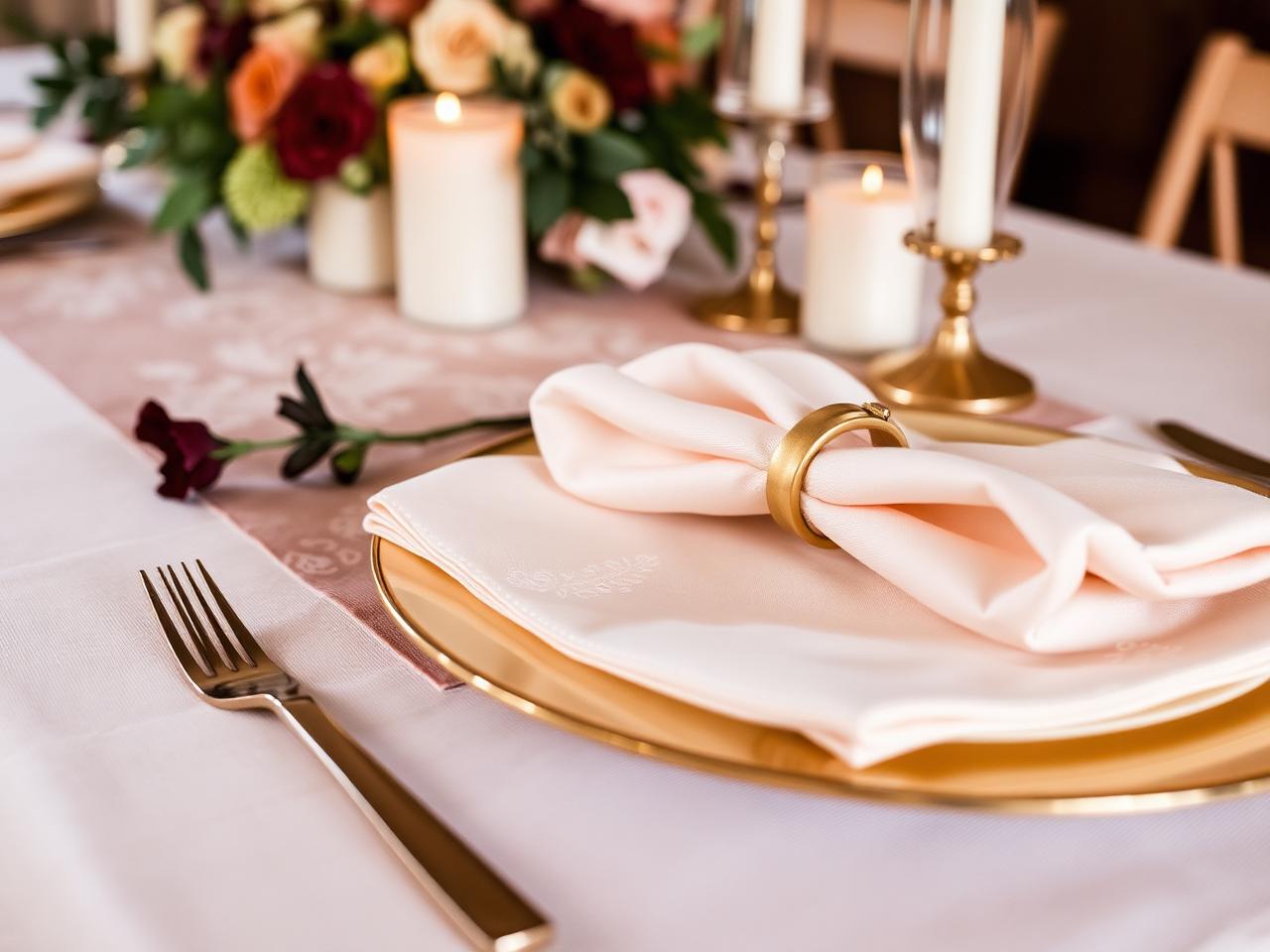
Table Settings That Look Expensive Without Being Expensive
Two tables can hold the exact same plates and cost the exact same money, and one looks like a magazine and the other looks like a banquet hall.
The difference is layering.
Build in layers, not items.
A set table has a cloth and a plate. A styled table has a cloth, a runner, a charger, a plate, a napkin with something on it, and a small object doing nothing but looking good. Same footprint, entirely different effect.
You do not need expensive pieces. You need more than one thing happening.
The runner does more than the tablecloth.
Tablecloths are usually white or ivory and that is fine. The runner is where you introduce your color, your texture, your theme. An embroidered sheer runner over a plain cloth transforms the whole table for very little.
Add height, always.
Flat tables photograph flat. You want something with vertical presence: a candlestick, a raised centerpiece, a tall floral. Vary the heights across the table so the eye moves instead of scanning a straight line.
Candlelight is the cheapest luxury there is.
Nothing else delivers this much atmosphere per dollar. Cluster votives in odd numbers. Mix pillar heights. Use real flame where the venue allows and quality flameless where it does not.
Warm light makes everyone look better, makes food look better, makes the room look softer. It is the single highest-return decor decision you can make.
Texture beats color.
When people want a table to feel elevated they usually reach for more color. Reach for more texture instead. Linen against glass. Brass against ceramic. Greenery against a smooth cloth. Contrast in material reads as considered in a way that color alone does not.
Repeat one element down the length.
One thing should recur: the same votive, the same bud vase, the same napkin fold. Repetition is what makes a long table read as designed rather than assembled in sections.
Want us to style yours? Tell us the room and the palette and we will take it from there.